Labels

Showing posts with label Fungis-diseases-anomalies. Show all posts

Friday, June 28, 2019

What´s happening with birches?

In the last 10 years, there are lot of problems with birches (Betula pendula), what's happening?

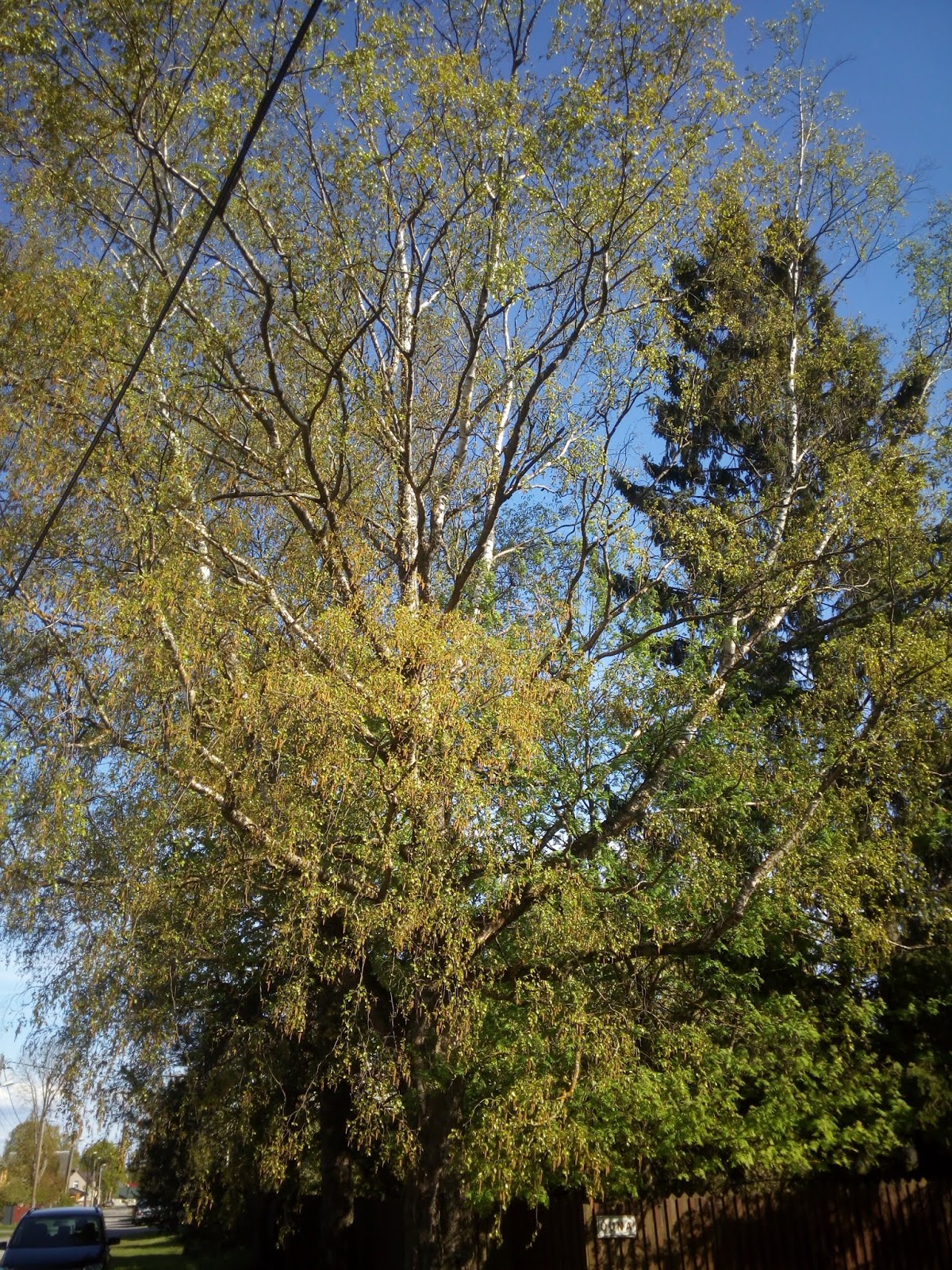
Thin canopy of Betula pendula. Photo: Ravel Reiljan


Who/what? 
It may be the fault of the fungal pathogen Neonectria sp. or oomycete Phytophthora sp. - rather in combination.
May be easily confused with Taphrina betulina, but the symptoms are much more widespread and the consequences are more serious.

Deformations in the trunk. Photo: Ravel Reiljan

Symptoms?
Hollows, bumps, cracks and other anomalies, thinned crown, smaller leaves than normal, dried tree branches, "bellies", lot of dead shoots, fractures of larger branches, "bumps" in the root collar area (up to 1,5 meters), leakings and often "life belts" in the same area, plus the round (not eccentric) shape of the wind roots - besides, I have also seen the presence of hydrotropy on sick trees.


Deformed Betula pendula. Photo: Ravel Reiljan

Why/how?
Hypothesis - In 2005, Pärnu (a small town in Estonia) was hit by a strong January storm, resulting flooding a part of town with a seawater.
Saltwatered dense soil could be the reason why the pathogens started to act.

Most of Phytophthora species are attacking a root systems and the root collar area - so it is logical that the primary symptoms appeared in the crowns of trees about 5-6 years after the flood, ie in 2010/11.


Bleeding area above the root collar. Photo: Ravel Reiljan

Is it wise to cut the bad branches out of the crown?
I have noticed that cutting off the still living branches deepens/accelerates the degeneration, so it would be advisable to cut off only dead branches.

The biggest problem is raising the crown - this should not be done if possible - because of H/D factor, inhibition of diameter growth, water and nutrient transport.


Broken Betula branch. Photo: Ravel Reiljan
What to do?
Trees try to deal with their own problems itself - by reducing their crown in the case of extensive root damage, and also by drying out branches.

The development of the pathogens is individual for each tree, which is why they need to be reviewed regularly and act accordingly.

In the urban environment, there is a serious risk of breaking/rupturing larger branches.
In case of Betula pendula - the biggest risk of breaking branches is in the late autumn after the plant has drained the crown of juice - it is that we lose the elasticity - which is replaced by brittleness.

So, unfortunately, it is so that in the next 15 years, many-many birches will have to be cut and replaced with more appropriate species
in area.


Source: Urbandendro
http://ravelreiljan.blogspot.com/
Friday, February 22, 2019

Why do elms dry and die?

On June 16, 1940, there were published an article in the Estonian newspaper "Postimees" titled "Why do our elms dry?".
This article described the invasive fungal disease - Duch elm disease (DED), (Ophiostoma ulmi - with slower development or more aggressive form Ophiostoma novo-ulmi) - and then it was written: "The disease occurs massively, spreads rapidly, and a large part of our elms is already caught or even destroyed".

History seems to be repeated and Estonia has been hit again by a large variety of outbreaks.
Over the country, you can often encounter sick trees at different stages - in parks, green spaces, gardens, and so on.


What are the symptoms of this fungal disease?

Typically, the disease begins with one or more twigs on the tree, with sharp wilting and drying - whereby the dried and kinky leaves remain on the tree.

The first sign of danger - dried branches in the crown. Photo: Ravel Reiljan

Then, the whole crown will dry out, which can take younger trees only a few weeks and older trees from a couple of months to several years.

Dying elm tree. Photo: Ravel Reiljan

Finally the whole tree dries and dies.

Dead elm tree. Photo: Ravel Reiljan

Relatively firmly, you can determine the disease by cutting off the sick branch and looking at its diagonal section when the first signs of the disease appear - if there is a dark streak near that outer edge, you can be quite convinced that this is Dutch elm disease (DED).
Trunk has often open bark (although not at the beginning of the infection), as if the tree were covered with a open coat.
However, no open bark is present on all sick trees, but a dark streak is always present.


Dark streak is easily visible. Photo: Ravel Reiljan

How to prevent?
Do not know yet.


What to do?
Basically, we can't do anything for the sick tree.
What can be done is to prevent the spread of the disease.
To do this, it is necessary to constantly monitor the state of the tree, and if it is seen that the signs are spreading fast and the drying of the tree seems to be certain, the tree should be cut.


Is this enough?
No.
The following is important:

1. The tools used for cutting (generally saws) should be disinfected (with antiseptic) after finishing work.

2. Cutting residues - should be burned immediately or -

3. When storing - if you want to make firewood for yourself - the logs should be peeled off and the bark should be burnt immediately (the bark must be peeled because of the
bark beetles that spreads the fungal infection).


If you follow these steps, you have already done a lot for other elms.


Source: author's personal notes and observations.
Also consulted by Liina Jürisoo, an Estonian University of Life Sciences doctoral student.

http://ravelreiljan.blogspot.com/ 

Sunday, January 20, 2019

Blackcurrant gall mite is attacking - what to do?

Sometimes in the summertime happens that the blackcurrant shrubs suddenly do not seem as healthy as they should be, also in the harvest time there are less berries as sooner years.
It can be caused by different pests or diseases, but it is most likely the result of black currant gall mite action.
In the Estonian environment, the black currant gall mite is mainly damaging black- and lesser red- or white currant, also very rarely gooseberry shrubs.


How do I know that it is gall mite? 
During the summer period, the damaged shrubs tends to be sickly and partially wretched. At the time of harvesting, the amount of berries is usually much smaller than in the previous harvest years. There are also some branches with old buds from the previous year.
The most convenient and secure is to determine the existence of pests in the spring (in Estonia the first half of March). Then look carefully at your shrubs - if there are two varieties of buds - one type rounded and the other with a sharp tip - the thing is, to put it mildly, dubious.
Buds where mites are in action. Photo: Ravel Reiljan
In this case, take a few round buds, look for a hard base and cut the buds with a thin piece of steel. Then use modern technology - (with naked eye you can't see nothing, because the size of the mites is only about 0,2mm) for example, a magnification glass or a mobile/camera macro.
There is no need to look for those characters very hard, because there may be a whole group, ie mite(s), eggs, larvae etc, in one bud. Moreover, the population of a single bud can be very large, reaching thousands of individuals - so if you have a handy tool with sufficient magnification, you will see them immediately (they have fun in bud and they fuss around).
Inside the bud - eating. Photo: Ravel Reiljan
What to do?
 
What if the diagnosis is confirmed?
Then you have to act - if the shrub is too tight, it has overgrown or drooping branches, then first thin your shrub to a reasonable extent, then start to pin out the round buds. Collect them and burn them immediately (not suitable for composting) with expelled branches - if you don't, the shrubs will soon be destroyed because the source of infection remains.
 
If about half of all buds remain in the shrub, the shrub can usually cope with the situation itself and begin to recover quietly next season (this activity must be repeated every year until the problem is off the agenda).
But if the bush has practically all buds inhabited, the story is more complicated - in this case, the situation should always be based on - how long have the symptoms lasted? Are there few or many shrubs damaged? Is there a risk of major financial damage

In this case, the use of a systemic poison or destruction of shrubs may be considered. You should now consult a professional.
When it is best time for pinning buds or thinning shrubs?
The most convenient time for this is actually the first half of March (in Estonia), because you can then easily make the difference of the good and bad buds, and this time is also well suited for thinning shrubs.
What more to notice?
A very important aspect - always disinfect the cutting tools before going to a new shrub and after cutting the last shrub.
Use antiseptics for this purpose (vodka is not suitable).

Why do they come to my plant?
If we are dealing with a shrub grown from good material that has been properly nursed in a nursery and then properly planted in a growing site/soil and has been properly maintained in the garden (agrotechnics), then this question is really justified.
However, if any link in this sequence is so weak that the plant cannot handle it quickly, it is not good - the stressed plant is susceptible to various malignancies and diseases, and then the serious problems are no longer far away.
So - the presence of mites in your plant is usually (in the case of mites, often the question is bad reproductive material) is a plant emergency call for you as a caregiver - something is wrong with the plant and it needs your urgent help.
How to help?
In this article I wouldn't better deal with it because the subject is more sizable and requires a separate approach - however, some of the risk factors I have noticed are: untreated (too tight, aged) shrubs, autumn leaf and placing apples under the shrub, ash throwing under the shrub and excess soil acidity. If you are attentive to these things, there is already a high probability that your shrubs will be healthier and stronger.

Friday, January 4, 2019

Horse-chestnut leaves are brown - what's happening?

In the last decade, the image, which is already common in all southern countries (Latvia, Lithuania, Poland), and is now even the so-called "normal" - is, the previously nice green leaf chestnuts (Aesculus hippocastanum) has been replaced with trees with brownish leaves and it is sometimes massive.

Horse-chestnut leaf miner Damage (Cameraria ohridella). Photo: Ravel Reiljan

What? Who?
In this case, it may be a moth, known as a horse-chestnut leaf miner (Cameraria ohridella).
The moth is in itself a nice-looking and meaningful being - http://insecta.pro/gallery/70366, its larvae are making the brown spots that can distract us.
In the case of soft winters, the pupae spend their time
cheerfully in the fallen leaves and are back in action in the springtime.
   There is also a fungal disease in Estonia that causes quite same thing, it is called Guignardia aesculii, but it can be easily distinguished from horse-chestnut leaf miner actions - look at the damaged leaf against light, and if you see that the spots are much brighter than the edges, it is a leaf miner work.


Horse-chestnut leaf miner Damage (Cameraria ohridella). Photo: Ravel Reiljan


Why is it like that?
This is probably because the climatic conditions of our location have changed for years now - long dry autumns and soft winters - all this has affected the general health of plants and the possibilities of fungi and insect pests living in different warmer regions to move to new hunting grounds.


Is it dangerous to plants?
At the moment, in general, not particularly - it is a problem for the plant to prevent the photosynthesis process and thus to inhibit the natural processes of the plant, but for humans, the problem is limited to a reduction in the ornamentation of the plants, which, for example, in certain gardens like botanical gardens, arboretums and nurseries can be quite uncomfortable.


What to do?
In principle, we can do our best for our plants - to take care of the availability of nutrients in the soil and access the necessary moisture, and - collecting and burning or composting the fallen leaves is a very important factor - this is probably the most useful method of protection.


Source: Urbandendro

http://ravelreiljan.blogspot.com/

Thursday, June 8, 2017

Poplar spiral gall aphid (Pemphigus spyrothecae)

Sometimes when we look our poplars we may be surprised or even frightened - there are weird formations on the petiole.


Spiral gall aphid (Pemphigus spyrothecae). Photo: Ravel Reiljan


What is it?
No need to be frightened but is allowed to be surprised - there are spiral gall aphids in action.


Is it dangerous?
Generally, they do not cause significant damage to the tree in its activities, but you should have to be careful - see below.


Does they live in all poplar species?
Specific aphid operates normally only in the following species: Berlin poplar (Populus berolinensis), Italy poplar (Populus nigra `Italica`) and in the black poplar (Populus nigra).


Why they attack my tree?
So far  I have met them in the trees who are some reason in the strong stress - as excessive aridity/humidity of soil, salting of streets (alley trees), bad maintenance and so on.


What to do?
It is wise to contact with arborist - arborist will examine the situation and gives advice what to do further.
Aphids are symptoms - they show that something is wrong with our tree, it needs help - there must be an ultimate cause.


You can read more about Pemphigus spyrothecae: http://www.agriculturejournals.cz/publicFiles/55823.pdf

Source: Urbandendro
http://ravelreiljan.blogspot.com/

Wednesday, June 7, 2017

Bacterial canker of poplar (Xanthomonas populi)


In Pärnu (small town), Estonia, we have 40 alley trees - Chinese poplar `Fastigiata` (Populus simonii `Fastigiata`).
Seems that they are seriously diseased - there are multiple symptoms which gives a suspicion of a bacterial canker (Xanthomonas populi).

Symptoms: different types of tumors (tumors have "rusty" or "bronze" look), cancers growth, strong bacterial secretion (bacterial secretion is under the pressure and smells like dung), bacterial secretion over the branch collar, which has ruined the cambium and causing drying of the branches.

I have found similar problems in Estonia also in the black poplar (Populus nigra).

I have found that removing dead or some unnecessary branches gives to the tree some relief also it releases some pressure from the tree trunk.

Source: Urbandendro
http://ravelreiljan.blogspot.com/

Typical tumor. Photo: Ravel Reiljan

Bacterial secretion is killing the cambium. Photo: Ravel Reiljan

Bacterial secretion is killing the cambium. Photo: Ravel Reiljan

Bacterial secretion is under the pressure. Photo: Ravel Reiljan

Dead cambium. Photo: Ravel Reiljan

Typical tumor. Photo: Ravel Reiljan

Dried bacterial secretion. Photo: Ravel Reiljan

Wednesday, February 22, 2017

Kui karusmarjapõõsad on haiged ehk karusmarja-jahukaste või jahukaste

Paraku on nii, et vanemad karusmarjasordid võivad kannatada suhteliselt tihti erinevate haiguste all - tavaliselt kahjustavad neid seen- ning viirushaigused, kohati ka kahjurid.

Kaks levinumatest, mis meid aias ehmatada võivad, on seenhaigused nimega karusmarja-jahukaste (Sphaerotheca mors-uvae) ja jahukaste (Microsphaera grossulariae).
Tegu on seenhaigustega, mis kahjustavad taime eri osi - ehk nii vilju, lehti kui ka võrseid - mainitud kattuvad hallika, hallikasvalge (tumeneva) kirmega - tavaline on ka nakatunud lehtede kuivamine ning varisemine põõsalt, samas jääb põõsas kiratsema, tekib arengupeetus ning marjade toidukõlblikkus ja saagikus saab tugevalt kannatada.


Kuidas need haigused levivad?
Selleks, et eelmainitud haigused edukalt levida ning kanda kinnitada saaksid, vajavad nad sobilikku keskkonda - näiteks optimaalset õhutemperatuuri +17-28C* ja samuti kõrget suhtelist õhuniiskus - vahemikus 80-100%.
Lisaks on täheldatud ka haiguste soodustumist peale ebanormaalselt suuri väetisekoguseid või peale ohtrat lämmastikuga väetamist (ühekülgne väetamine).


Miks põõsad haigestusid?
Sellele küsimusele pole tegelikult lihtne vastata, kuna põhjuseid on enamasti mitmeid ning tavaliselt sekkub olukorda ka mitme kehva sündmuse koosmõju.

Esmalt tuleks mõista seda, et taimede puhul on meil siiski tegemist elusorganismidega ning nagu igal elusorganismil, on ka taimedel oma füsioloogia ehk "toimimismehhanism".
Mõnes mõttes võiks seda võrrelda inimese organismiga - nii nagu inimeste puhul pole haiguste teke tavaliselt vaid ühe faktori põhjustatud, nii on see ka taimede puhul.

Niisiis - mõningad põhjused, miks meie karusmarjapõõsad võivad haigeks jääda, on minu vaatenurgast lähtudes järgmised (suvalises järjekorras):

1. Stress.
Kui taime enda, tema kasvupinnase või ümbritseva keskkonnaga toimuvad mingid muutused, siis tekitab see taimes üldjuhul stressi, positiivsete muutuste puhul on see kasulik, kuna see ergutab taime, negatiivsete muutuste puhul aga annab taim meile kohe märku, et "midagi on valesti".

2. Liig happeline või liig neutraalne kasvupinnas.
Karusmarjapõõsad vajavad kasvupinnase optimaalseks happesuse vahemikuks ca 5,5-6,2pH.
Olen kohanud aedu, kus kasvupinnase happesus on alla 5pH, samuti aedu, kus see on jällegi üle 8pH - seega - sama piirkonna aedade kasvupinnase happesus võib olla erinevatel põhjustel äärmusest äärmusesse.
Kasvupinnase pH mõõtmiseks on olemas erinevaid tehnoloogiaid ning seadmeid, kuid kindlaim viis selleks on kasutada aednike abi, kuna neil on (või peaks olema) olemas nii tehnoloogia kui ka teadmised happesuse määramiseks ning selle reguleerimiseks.
Happesuse teema on ulatuslikum ning seda puudutame kunagi hiljem mõnes uues postituses.
Üldjuhul võiks öelda - kui teie taimedel on mingi "uus" haigus, mida varem pole olnud, siis on suhteliselt vähe tõenäoline, et selle üheks põhjuseks võiks olla pH tasakaalu muutus.

3. Liiga intensiivne lõikus (harvendamine).
Tihti on probleemiks ka liiga tugev harvendamine - selge on see, et karusmarjapõõsas peaks olema piisavalt hõre, et seal käega vabalt askeldada saaks ning valgus ja õhk ka viljadeni ulatuks, kuid pikemalt hooldamata (harvendamata) põõsaste puhul ei tohiks seda kindlasti saavutada ühe hooaja jooksul.
Pikalt hooldamata põõsaste puhul tuleks nn "noorendusharvendus" teostada paari-kolme aastaga, lõigates igal aastal paarkümmend protsenti vanimatest harudest välja.
Paari kolme aasta möödudes tuleks edaspidi igal aastal vastavalt vajadusele ja põõsa suurusele välja lõigata nii palju, et põõsas saaks piisavalt õhku ja valgust ka keskosasse.
Sobiv aeg harvendamiseks on laias laastus detsembrist märtsi lõpuni.

4. Kui põõsad on hooldamata.
Kui põõsad on mitmeid aastaid hooldamata, on probleemiks vananenud harud ning tihe põõsas - liigse tiheduse tõttu ei saa ka uued võrsed edukalt areneda, kuna neil pole piisavalt õhku, valgust ning ruumi. Hooldamata põõsad on oma tiheduse tõttu seenhaiguste kasvulavaks - peale vihmast ilma on lehtede vahel palju niiskust ning lehed ei kuiva piisavalt kiiresti.

5. Kui põõsas kasvab heina.
Tihti kasvab marjapõõsaste südamikus ka lihtsalt heintaimi või muid võõrliike - väga oluline on põõsad seest heinavabad hoida.

6. Laotatakse põõsa alla tuhka.
Väga levinud stressoriks on tuha laotamine, eriti probleemne on see siis kui tuhka heidetakse põõsa südamikku või jäetakse kuhjakestena põõsa alla.
Puutuhka võite aias kasvupinnase neutraliseerijana kasutada küll, kuid seda tuleks jaotada ühtlaselt ning pigem põõsaste perimeetrit mööda.


Mida teha haigete põõsastega?
Üks võimalus on kasutada mõnda selleks sobilikku fungitsiidi (seenorganismide vastast preparaati), kuid seda soovitan ma kasutada siiski vaid tootmise puhul ning erialaspetsialisti kontrolli all.
Kodumajapidamises tasuks kemikaalipurgid käeulatusest eemale tõsta ning vaadata kõigepealt postituse eelmist alateemat - kas on ehk midagi, mis käib minu taimede kohta ning mida saaksin muuta?
Kui see on nii, siis tuleks proovida vastavalt ülaltoodud nõuannetele taime stressi vähendada ning lisaks sellele teha järgmist:

1. Kuna tüüpilise haiguspildi korral on kõige kehvemas seisus värsked võrsed ehk taime harude "ladvad", siis oleks mõistlik neid tagasi lõigata ja lõigatud osad ära hävitada - parim viis selleks on põletamine - kindlasti ei tohiks jääke kompostida.

2. Sügisel kui taim oma lehed langetab, siis korjake hoolsalt kõik lehed ja ka marjad kokku ning hävitage - vastasel korral toimub uuel kevadel taas uus nakkuspuhang kui talvel kenasti mahalangenud viljadel ja lehtedel puhanud seenhaigus taas aktiveerub.

3. Kui taim on üleni hallitusega kaetud ning eakas (viljakandeaeg möödumas), siis oleks mõistlik ta välja kaevata ning hävitada - uue taime võiks istutada uude asukohta.
Üldiselt on enamus uutest sortidest ka jahukastekindlad.

4. Lisaks võib kasutada ka "lihtkeemiat" - näiteks soovitatakse kasutada virtsavett - vahetult peale lehtede kasvu algust pritsida taim üle käärinud virtsalahusega. Selleks võtta üks osa virtsa, kaks osa vett, lasta 3-4 päeva käärida, siis segada 3 osa kääritist 1 osa veega ja asuda pritsimistööle.
Kas see on ka enda ja oma lähedaste osas mõistlik lahendus, selles ma juba kahtlen.

Teise nipina kasutatakse ka näiteks pesusooda lahusega pritsimist, mis on juba mõistlikum.
Selleks segatakse 50g pesusoodat 10L veega, kuhu lisatakse 40g rohelist seepi.
Sellise seguga pritsitakse enne ning pärast õitsemist nädalase vahega 3-4 korda.


Lõppkokkuvõtteks võiks siiski öelda, et mõistlikkus taimede eest hoolitsemises ning nende vajadustega arvestamine ja igasugustest äärmustest hoidumine võiks olla eduka koostöö võtmeks.
Proovige eeltoodud põhimõtteid kasvõi osaliselt rakendada ning suure tõenäosusega paraneb ka teie taimede olukord.


Allikas: autori isiklikud kogemused ning tähelepanekud.